
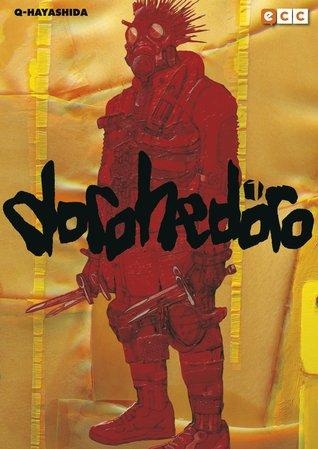
Dorohedoro world building doesn't care if you understand it immediately. Q Hayashida built a setting where magic runs on black smoke coming out of people's fingers, where one dimension is a grimy back alley that never stops raining and the other is a sunny hellhole ruled by mushroom dictators. Most people get confused by the ending or think the magic system makes no sense, but that's because they're looking for hard rules in a story that runs on vibes and biological absurdity. The whole point is that magic isn't a science here, it's a bodily function that happens to tear holes in reality, and trying to categorize it misses the point entirely.
You've got humans stuck in The Hole, a city that looks like if you stacked twelve industrial revolutions on top of each other and then let them rust for a century. It's dark. It's wet. It rains constantly because the residual magic in the air from all the sorcerer attacks condenses into toxic precipitation that mutates anyone who stays outside too long. The buildings are huge dilapidated industrial structures that loom over narrow streets filled with trash and desperation. Sorcerers use magic doors to pop in from their own dimension, grab some humans, and test their smoke on them. The humans can't do magic. They're just meat with anxiety and bad living conditions. But the sorcerers need them because practicing magic on other sorcerers starts wars, and practicing on nothing doesn't show you if your curse really works or just looks pretty. It's a predatory relationship built on the fact that one group has biological weaponry and the other has opposable thumbs and fear.
Professor Kasukabe runs a hospital in The Hole with a specific wing dedicated to treating victims of magical experimentation. He studies the sorcerers and has built his own door to their world. He's also got a weird obsession with dissecting things and a backstory involving his wife being transformed. The humans here have adapted to the oppression by developing ways to fight back, including the eventual Hole-kun statues that let them nullify magic, but for most of the series they're just trying to survive the constant rain that burns their skin and the random kidnappings.
How the Magic User World Actually Functions
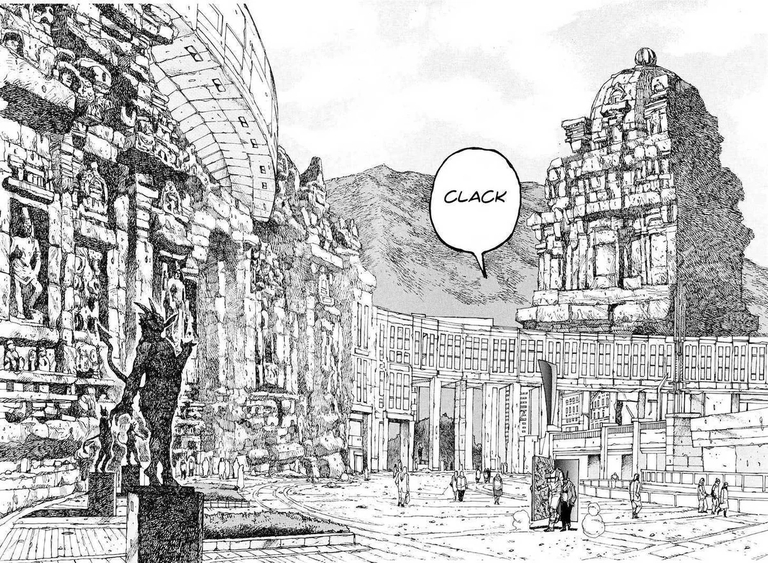
The Magic User World sits next door, created by a primordial devil named Chidaruma because he got bored watching sorcerers drop into hell when they died. He wanted a waiting room between life and death, so he built a whole separate plane of existence where it never rains and everyone wears masks. The masks don't do anything magical. They're just cultural identity markers that make everyone look like they're cosplaying as gas station attendants from a 1970s post-apocalypse movie. But if you lose your mask, you lose your social standing. Devils hand them out at festivals. It's weird and arbitrary and that's exactly how the sorcerers like it because their entire society runs on arbitrary power displays and visual uniformity. The architecture here resembles The Hole but cleaner, with ancient structures adorned with devil imagery and buildings no larger than mansions except for En's massive estate.
Before En took over, the Magic User World was a chaotic mess of mutual oppression and enslavement. Powerful sorcerers would capture rare magic types and harvest their smoke until they died. Weak magic users or those unable to produce smoke were treated as outcasts and left to starve. En unified the world through a combination of fear, overwhelming mushroom power, and strategic economic measures. He established a more civilized society where Magic Users are considered an elite class, though the weak remain marginalized and poor. There used to be a Zagan School that tried to help weak magic users understand and improve their abilities, but En shut it down because it became associated with the Cross-Eyes and gained a bad reputation.
Black Smoke Mechanics and Biological Determinism
Let's talk about the smoke because that's where people get lost. Sorcerers produce black smoke from their bodies. Not their hands specifically, just... their bodies. The amount and quality depends on the individual. Some people, like En, can fill a room with smoke that turns everything into mushrooms, including people, buildings, and the air itself. Others, like Fujita, can barely blow up a door and struggles to control his output, often failing to produce smoke when he needs it most. The smoke is biological. It's tied to their physical condition, their emotions, and sometimes their diet. There's no mana pool. There's no spell slots. You just have smoke or you don't, and if you run out, you need to rest and eat. Weak sorcerers sometimes can't produce smoke at all. They're called the smokeless, and they get treated like garbage by the elite magic users who can turn you inside out with a cough. Even among those born with the ability, many have weak or difficult-to-access magic. Shin, for example, has powerful magic that requires effort to manifest properly, while Ebisu has lizard magic that transforms her into a dinosaur or changes her face depending on her emotional state.
Shin's magic specifically allows him to sever a person's body into pieces while keeping them alive, which he uses for both combat and interrogation. It's gruesome and precise. Noi's healing can regenerate flesh and organs, making her invaluable for keeping the En Family alive during turf wars. She's also physically trained to Olympic bodybuilder standards, using her magic as backup rather than her primary offense. Fujita has destructive magic but can't control his smoke output effectively, making him weak compared to the cleaners. Ebisu's magic transforms her into different creatures, including a dinosaur, usually triggered by emotional distress or accidents.
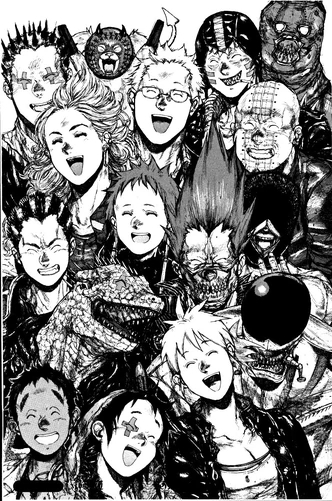
The Cross-Eyes gang formed around these outcasts. Risu, the guy who ends up being way more important than he looks, couldn't make smoke for most of his life. He got beaten, harassed, and nearly killed for it. He only found stability by joining the Cross-Eyes, who supported each other financially and educationally. But here's where it gets messy. There's a drug called black powder that lets sorcerers boost their smoke production temporarily. It's addictive, it's destructive, and it's made from processing sorcerers or their residue. The Cross-Eyes deal in it to survive. So you've got this underclass selling performance enhancing drugs to the upper class just to afford food, while the upper class uses those drugs to become more efficient at oppressing the underclass. Hayashida wasn't subtle about the class warfare metaphor, but she wrapped it in enough body horror that you might miss the economic commentary while you're watching someone get their head unscrewed.
The En Family and Their Cleaners
En runs the show in the Magic User World. He came from nothing, got enslaved as a kid because his smoke turned his parents into mushrooms accidentally, and spent years being harvested for his smoke in factories. When he died from exhaustion, he was so angry that he clawed his way back from hell with Chidaruma's help, murdered his way through the factory owners, and established a monopoly on both violence and fungi. Now he runs a family of cleaners, assassins who handle problems for him. Shin and Noi are the heavy hitters. Shin can sever your nerves without breaking your skin, keeping you alive while he takes you apart piece by piece. Noi can heal anything, including reattaching limbs that Shin just removed or regenerating organs that got melted by acid magic.
They're partners through a magical contract that lets them feel each other's status and location. These contracts aren't romantic, they're survival tools in a world where getting separated means getting murdered by a rival family or a rogue sorcerer looking to make a name. The partner contracts are forced upon many sorcerers due to the cruelty of the world. En forces Nikaido into one using her debt and his power, ensuring he can track her and she can't escape. These contracts create a bond where partners feel each other's physical state and location, making betrayal difficult but also creating codependency.
Caiman and the Identity Crisis Inside His Mouth
Caiman, the lizard-headed protagonist, starts the story by biting sorcerers' heads to ask what the man inside his mouth says. He's got a guy living in his throat who judges whether the sorcerer he's eating is the one who cursed him. This setup sounds ridiculous because it is. The confusion about Caiman's identity stems from the fact that he was originally Aikawa, a friend of Risu, who got possessed or merged with Kai, the leader of the Cross-Eyes, who had his own agenda involving becoming a devil. Risu died and became a curse that attached to Kai/Aikawa, creating a composite being. Then Ebisu's magic, which transforms things into lizards, got mixed in during a fight, creating the lizard head. So Caiman is the amnesiac remnant of Aikawa's personality floating on top of Kai's body with Risu's curse providing the man inside the mouth. When the lizard head comes off, he's Aikawa again, but with Kai's memories and Risu's presence still lurking.
The timeline folds in on itself because Nikaido, Caiman's best friend who runs a gyoza restaurant called The Hungry Bug, has time magic that she rarely uses because it turns her into a devil. Every time she rewinds time, she gets closer to losing her humanity and sprouting horns and a tail. She hides this power because time magic users are rare and valuable, and En forces her into a contract to exploit it after discovering her secret.
Devils Betting on Suffering
The devils in this series aren't benevolent gods or Satanic evil overlords in the traditional sense. Chidaruma created the Magic User World on a whim, and the other devils like Asu and Haru spend their time placing bets on human and sorcerer suffering. They are foolish, violent, narcissistic, and immensely powerful. Disrespecting them carries a death sentence, but they mostly don't care about the moral outcomes of the story. They just want entertainment. Becoming a devil requires specific magical contracts and physical transformations that look painful. You can't get there through hard work or training; it requires specific biological changes and usually involves losing your humanity in the process. Asu helps Nikaido throughout the series, acting against devil neutrality, which gets his status revoked temporarily.
That Messy Ending Finally Explained
The ending happens after the Cross-Eyes boss, who is also Kai, who is also Caiman without the lizard head, decides to consume everything and everyone to become a devil. There's an entity called Hole, or Holey, which is basically the accumulated rage of every human ever murdered by sorcerers in The Hole. It manifests as sentient tube goo that possesses people and turns them into extensions of its will. The goo controls humans and creates a network of suffering. The final battle involves Holey using Nikaido's stolen time magic to cut her into pieces while she's still alive and aware, scattering her across different time periods.
Fujita, made invisible by Mr. Sho's magic, searches for En's dismembered head during the chaos. Shin implants an invincibility device in Noi to keep her alive during the fighting. Mr. Sho uses his dematerialization power to help En's family confront Holey. En himself gets resurrected and immediately starts looking for his family, showing that even after death and apocalypse, his priorities remain consistent. Caiman, who has by this point accepted he's a sorcerer despite having a human face again, grabs a magic wand made of gyoza because this series never stopped being weird. He uses it to fight alongside En's family, who are trying to get their boss back from being dissected by the goo, while the devils watch from the sidelines placing bets on who will die first.
Everything gets resolved when Risu, who has finally manifested as his own curse entity separate from Kai, uses a special store knife that can cut anything to sever the connection between Holey and the world. The devils, who have been watching this whole thing like it's a sports match, lose a bet they made about who would win. Chidaruma, the head devil who created the Magic User World in the first place, gets cursed to live as a human for five thousand years as punishment for losing the wager. Asu, the devil who helped Nikaido throughout the series, gets his devil status revoked and then restored. Nikaido gets put back together through time magic reversal.
The Magic User World gets partially destroyed or at least massively damaged by the fighting, and the Hole-kun statues, these weird ceramic figures that look like a cartoon mascot, start granting humans the ability to fight back against sorcerers, effectively ending the era of one-sided magical oppression. The Hole-kun statues represent a fundamental shift in the power balance. Before the ending, humans had no defense against sorcerers except running or hiding. After the destruction of the Magic User World and the dispersal of magic, these statues give humans the ability to nullify or fight back against magical attacks. This means the next time sorcerers try to raid The Hole for test subjects, they might get killed by the humans instead. It's not a happy ending where everyone holds hands; it's an armed ceasefire where both sides know the other can fight back.
The last chapter shows Caiman and Nikaido back at The Hungry Bug making gyoza like nothing happened. En and his family are rebuilding their mansion and their criminal empire. Risu and Asu became devils or something close to it through the leftover magic floating around. Everyone is exhausted but alive. Some fans hate this because they wanted definitive answers about who Caiman really is, whether he's Kai or Aikawa or someone new. The thing is, Caiman is everyone and no one. He's the identity built from shared trauma and magical accidents. The lizard head was a curse, but it was also a protection from his past. When it's gone, he's just a guy with a lot of blood on his hands and a friend who makes good dumplings.
Why the Rules Don't Matter
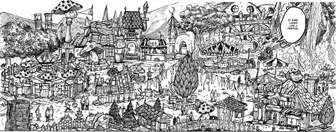
The magic system works because it's unfair. It doesn't have rules you can game or train around. You can't train to produce more smoke if your body doesn't make it. You can't become a devil through hard work; you get there through specific magical contracts and physical changes that look painful and irreversible. The world is built on biological determinism meeting cosmic apathy. Chidaruma made the world on a whim. The sorcerers oppress humans because they can. The humans fight back because they have no choice. The ending isn't about conquering evil or getting revenge; it's about surviving long enough for the devils to get bored and leave you alone, and maybe opening a restaurant with your best friend.
If you go into Dorohedoro looking for a power system with consistent scaling like Hunter x Hunter or Naruto, you'll leave frustrated and confused. But if you accept that magic here is like having a weird mutant arm that can sometimes turn people into furniture or mushrooms or dust, it clicks into place. The world is dirty, the rules are messy, and the ending leaves you with a full stomach and a headache. That's exactly the point Hayashida was trying to make.