
Everyone fixates on the ending of Weathering With You where Tokyo drowns and the kids don't care. That's the whole point though. Makoto Shinkai didn't make another Your Name with this film, he made something way messier and honestly more interesting even if it pisses people off. The movie looks gorgeous obviously, the rain effects are probably the best ever animated in the medium, but the real juice is in how it asks whether saving one person you love matters more than saving a whole city from climate disaster. It rejects the idea that children owe the world their pain for the greater good.
The Weather Girl Business Makes Zero Sense and That's Fine.
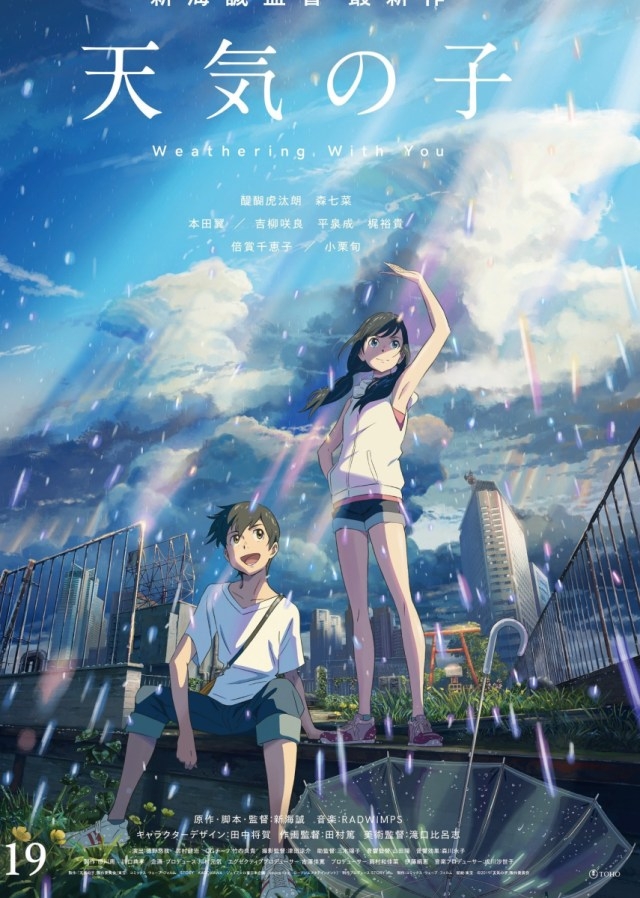
Hina and Hodaka start charging people for sunshine like it's some kind of weird startup. It's pure capitalist logic shoved into a fantasy premise and the movie never judges them for it. They're both broke kids trying to survive in Tokyo's garbage economy so they monetize a miracle. Most anime would turn this into a heavy handed lesson about greed corrupting innocence but Shinkai just lets them hustle. You got shrine visits, weddings, random people who just want to dry their laundry, and they charge for all of it without apology. The mechanics of Hina's power stay vague on purpose which works better than over explaining everything. She prays, the sun comes out, she gets wetter and more transparent each time until she starts fading away. That's it. No complex magic system bible needed, no long exposition scenes about ancient rituals. The movie trusts you to get it.
Their business model makes no logistical sense if you think about it for more than ten seconds. They're taking requests via a website that Hodaka presumably built despite being a runaway with no computer, they're traveling all over Tokyo for like five thousand yen a pop, and they're spending money on ingredients for the shrine offerings. But it doesn't matter because the business isn't the point, the partnership is. Working together gives them an excuse to be together every day. It gives Hodaka a reason to wake up and Hina a reason to keep using her power even as it drains her life force. The economic reality of being a teenager alone in Tokyo is brutal and the movie shows that without romanticizing poverty. Hodaka sleeps in bathrooms and eats garbage until he finds Suga. Hina is one missed payment away from being separated from her brother by social services. The sunshine business is survival, not greed.
Everyone Gets the Ending Wrong and It's Annoying
People call Hodaka selfish for choosing Hina over Tokyo. They're wrong and it's frustrating to watch. The movie isn't about climate change activism or utilitarian ethics where you calculate the greatest good for the greatest number. It's about choice and who gets to make them. Hina never asked to be the weather maiden. Some external force, whether you want to call it gods or just the weird physics of this universe, picked her because she was vulnerable and alone at that shrine. She was a child mourning her mother and the world decided she should suffer for everyone else's comfort. When Hodaka busts into that sky realm with the gun, he's not just saving a girl, he's saying nobody gets to demand sacrifice from a child. The city floods yeah, but the movie shows life continues. People adapt. The water doesn't end the world, it just changes how the city works.
The ending bothers viewers who want clean moral victories where everyone wins. But Shinkai is asking a harder question. Why should a fifteen year old girl die so adults can have sunny picnics? The rain wasn't caused by Hina, it was already happening. She was just supposed to be the bandage, the temporary fix that required her death. Hodaka looks at that equation and decides it's garbage. He chooses the specific person he loves over the abstract concept of the greater good. Three years later when they reunite, Tokyo is half underwater but people are living on boats and raised walkways. Kids play in the water. Business continues. It's not a tragedy, it's just different. The movie suggests that forcing martyrdom on children is worse than any natural disaster.
The Gun Matters More Than You Think
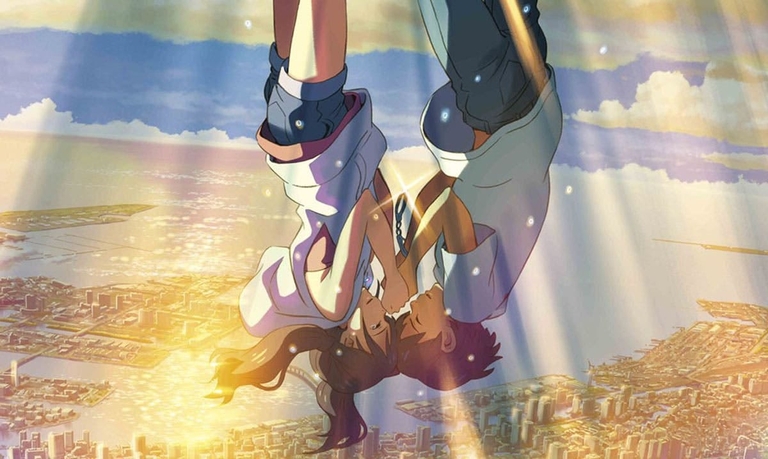
Hodaka finds a gun in the trash and keeps it. In any other movie this would be edgy symbolism for teenage rebellion but here it's about power and who has it. He's a runaway kid with no status, no money, no legal identity, and no adults who will listen to him. The gun is the only thing that makes the police or social services take him seriously. When he points it at Suga during the climax on the abandoned building, it's not random violence or psychosis, it's a desperate kid realizing that words don't work against bureaucracy. The cops want to send him home to a situation he ran away from for good reasons, social services want to split up Hina and Nagi into foster care, and nobody cares what the kids actually want. The gun levels the playing field for three minutes and gives him enough time to jump into the sky.
The firearm disappears after that scene because it served its purpose. It wasn't about the weapon, it was about agency. Hodaka starts the movie passive, getting pushed around by the ferry crew, by Tokyo's crowds, by the cops. The gun represents the moment he stops asking for permission. He doesn't shoot anyone, he just uses it to create space for his choice. That's a controversial storytelling decision because guns in teen stories usually end in tragedy, but here it's just a tool for self determination. It shows how far the system has failed these kids that a deadly weapon becomes their only bargaining chip against the state.
Visuals That Actually Hurt to Watch
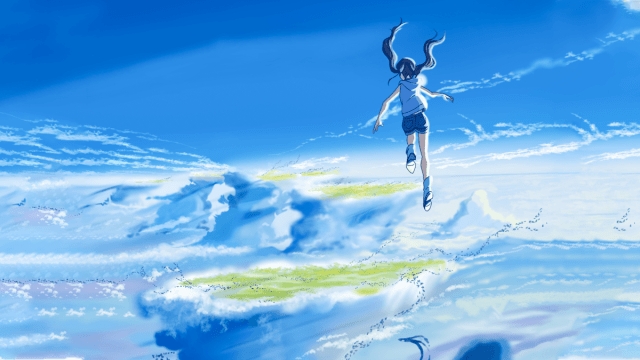
The rain in this movie doesn't look like other anime rain. It looks like actual water behaving badly, hitting surfaces with weight and splashing correctly. Shinkai's team spent forever getting the refraction right, the way light breaks through clouds after Hina prays, how wet clothes cling to skin with actual physics instead of just being darker colored. When Hina jumps into that sky realm, the cloud physics look impossible and real at the same time, like vapor that's somehow solid enough to stand on. You can see every yen of the animation budget on screen in the water droplets.
The contrast between the gray soaking wet Tokyo and those brief moments of blinding sunshine actually makes your eyes hurt in a good way. It's showing not telling except it's showing weather. When the sun finally breaks through after one of Hina's prayers, the brightness is almost violent compared to the endless drizzle. The movie uses 3D CG for some of the water effects but blends it so well with the hand drawn elements that you can't tell where one ends and the other begins. The sky itself becomes a character, looming overhead with layers of clouds that look like they have depth and personality. Apparently some data shows that Shinkai has been refining these techniques since his early solo projects, but this film represents the peak of his obsession with atmospheric phenomena.
Keisuke Suga Steals the Show
The best character isn't the teens, it's the washed up writer who takes Hodaka in. Suga has his own thing going with his dead wife and his daughter he can't see because of custody issues. His arc about learning to give a damn again hits harder than the romance sometimes. When he helps Hodaka at the end despite risking his own custody battle, that's the real emotional beat. He represents what Hodaka could become in fifteen years, a guy who gave up and got cynical but finds one last reason to act like the world matters. The movie should have given him more screen time instead of the random comedy bits with the car chase.
Suga's relationship with his niece Natsumi also adds layers. She's trying to find work, he's trying to keep his publishing company afloat, and together they're this weird broken family unit that temporarily adopts Hodaka. The scene where Suga explains why he can't take Hodaka in officially, laying out the economic reality of being a single father in Japan, is one of the most honest moments in the film. He isn't cruel, he's just trapped by the same system that wants to separate Hina from Nagi. His choice at the end to help Hodaka break the law represents him rejecting that system even at personal cost.
Your Name Looms Too Large Over This
You can't talk about Weathering With You without mentioning Shinkai's previous hit. Yeah, this movie hits some of the same story beats. Runaway meets mysterious girl, supernatural interference in daily life, race against time to save her from disappearing, disaster strikes city, bittersweet ending with time skip. But the tone is totally different. Your Name is about fate bringing people together across time and space, about red threads of destiny and cosmic coincidence. Weathering With You is about choosing to be together even when fate says screw you, about rejecting destiny when it demands too high a price. Also the leads in this one actually talk to each other and build a relationship in real time instead of body swapping and falling in love through diary entries.
The comparison annoys me because it treats this film like a sequel or a copy when it's really a response. Shinkai took the goodwill from Your Name and used it to make something riskier. Some reviews note the similarities in the third act structure, but miss that the thematic intent is opposite. Your Name saves the town through sacrifice and dedication to the past. Weathering With You lets the town flood to save the present moment and the people in it. One looks backward, one looks forward.
That McDonald's Scene Breaks the Movie
The product placement is so blatant it pulls you right out of the story. They're just sitting there eating Big Macs and talking about how good the fries are while the camera lingers on the logo. It's not subtle. It feels like the production needed funding and McDonald's paid for a whole sequence. Takes you right out of the fantasy when you realize you're watching a commercial in the middle of an art film about magical weather girls. Some viewers found it distracting enough to mention specifically.
The scene could have been any cheap restaurant, any convenience store onigiri, but they chose to make it a specific international brand. It grounds the movie too much in our reality and breaks the spell. When you're dealing with sky realms and ancient weather rituals, having a very recognizable fast food chain in the middle of it creates cognitive dissonance. It's not the worst product placement in anime history but it's unnecessary and cheapens the moment where Hodaka and Hina are bonding over being broke and hungry.
The Soundtrack Works Overtime
RADWIMPS comes back from Your Name but this time the music integrates tighter with the action. When Hodaka is running through the streets or when Hina does her prayers, the songs don't just play over the scenes, they punctuate them. "Grand Escape" during the climax is basically doing half the emotional lifting. The lyrics about weather and changing skies could be cheesy but they hit because the visuals are so committed. The music swells exactly when the clouds break or when the rain starts again.
The instrumental tracks during the quiet moments are just as important. There's a piano piece that plays during Hodaka's early days in Tokyo that sounds cold and lonely, all isolated notes that don't resolve properly. It mirrors his status as an outsider with no connections. When he meets Hina, the music gets warmer, more strings and major keys. The audio design in general is excellent, with the sound of rain being a constant background noise that changes from gentle tapping to violent drumming depending on the mood.
Tokyo as a Drowned City Isn't a Tragedy
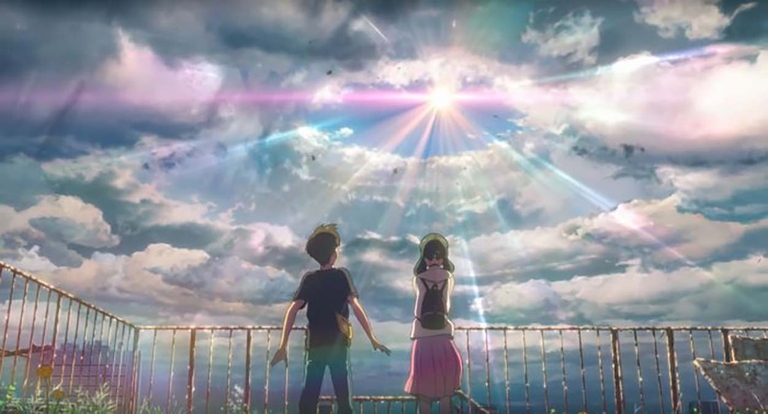
The flooded Tokyo at the end isn't presented as an apocalypse in the traditional sense. The movie treats it like a new normal that people adapt to. Three years after Hina is saved, we see the city transformed into something like Venice. People move to higher ground, they use boats to get around, life finds a way to continue. That's a weirdly hopeful message about climate adaptation even if it seems dark on the surface. It's saying we don't need to return to some pristine past, we need to live with what we have and change our expectations. The city becomes a place with new routines where kids play in the water and businesses operate from second floors.
This interpretation goes against what a lot of critics thought the movie was saying. Some analysis suggests that the flood is the result of natural balance being restored after Hina refuses to sacrifice herself, not a punishment. The weather was already broken before she got involved. Her prayers were just delaying the inevitable while killing her slowly. When Hodaka saves her, the rain returns to what it would have been anyway. The city adapts because that's what cities do. The movie shows that human connection is more resilient than concrete infrastructure.
Why the Police Represent the Real Enemy
Not literally the enemy, but the system they enforce keeps trying to separate families and deny agency. They want to send Hodaka back to his presumably abusive home on that island. They want to put Hina's brother in foster care and send her to work in clubs or worse. The movie positions bureaucracy and the state's definition of "welfare" as the antagonist to human connection. When Hodaka breaks the law to save Hina, he's not being a criminal, he's being human. The law says kids belong in safe homes but doesn't care if those homes are actually safe or if the kids want to be there.
The chase scene with the cops is over the top and action movie silly but it serves a purpose. It shows the state mobilizing resources to stop a teenager from saving his girlfriend, resources they couldn't mobilize to stop the rain or help homeless kids. The detective who keeps pursuing them represents adult authority that refuses to listen to children's voices. When Suga helps Hodaka escape, he's choosing human decency over legal compliance. The movie argues that sometimes the law is wrong and you have to break it to do what's right.
The Weather Maiden Lore Works Because It's Vague
We never get a full explanation of why Hina can control the weather or what the sky realm actually is. There's talk of her being "100% clear sky" and her body being offered to the heavens, but no mythology textbook comes out to over explain it. This works in the film's favor. The ambiguity makes it feel more like folklore than fantasy worldbuilding. She's a shrine maiden who got powers because she wished on a weird shrine gate during a storm while mourning her mom. That's enough. We don't need to know the exact rules of the magic system.
The torii gate in the abandoned building acts as a portal to another dimension or heaven or whatever you want to call it. The clouds up there have fish swimming in them and the gravity is weird. It looks like the afterlife. When Hina is absorbed into it, she's becoming part of the weather itself, dispersing into the atmosphere to regulate it. Hodaka pulling her back is literally dragging a spirit back from heaven against the will of whatever forces control the climate. That ambiguity lets you project your own beliefs onto it. Maybe it's climate gods, maybe it's just weird physics, maybe it's a metaphor for growing up and losing innocence. The movie lets you pick.
Weathering With You anime movie analysis usually gets bogged down in whether the ending is morally correct or if it's promoting selfishness. That's missing the point entirely. The film asks what we'd sacrifice for love and whether the world has a right to demand martyrs from children who never agreed to the contract. It looks incredible with rain effects that set a new standard for the industry, sounds great with a soundtrack that knows exactly when to swell, and makes you uncomfortable on purpose with its rejection of traditional heroism. It's not as clean or crowd pleasing as Your Name but it's braver and more honest about how the world actually treats vulnerable kids. Shinkai took the goodwill from his biggest hit and made something that challenges his audience instead of comforting them. That makes it worth watching even if you end up arguing about the ending for hours afterward. The movie doesn't care if you think Hodaka made the wrong choice. It just cares that he made a choice at all.